Months to days · 2 factories, 2 brands · 3 products
I led UX for PaperTale's traceability platform, from first research to pilots with Gina Tricot and Sail Racing.
Role
Head of Innovation · PaperTale Technologies AB · October 2021 to January 2025. I designed the workflows, the apps and the platform, and worked with the development team to make the experience easier for the people using it.
The challenge
Brands have to prove where their clothes come from and what they cost the planet. The work of proving it lands on the factory. For every order, a factory had to gather data from each supplier, collect certificates, get claims verified and calculate environmental impact. It took months, and the brands kept asking for more.
What I saw
Our first model treated the supply chain as a line: cotton, yarn, textile, garment. Real orders do not work that way. The cotton comes from one country, the yarn from another, the trims from a third. A factory buys cotton from two vendors and blends yarn from two sources. The line could not hold any of that.
The supply chain of a garment, drawn: cotton, a spinner, a fabric mill, a dyeing house, a garment factory and a brand.
Week 0
Press a box to see who it can talk to.
Scan the tag: a hoodie with a hang tag and its QR code, and a phone that reads it. Every figure is an example.
Drag me over the tag
What I built
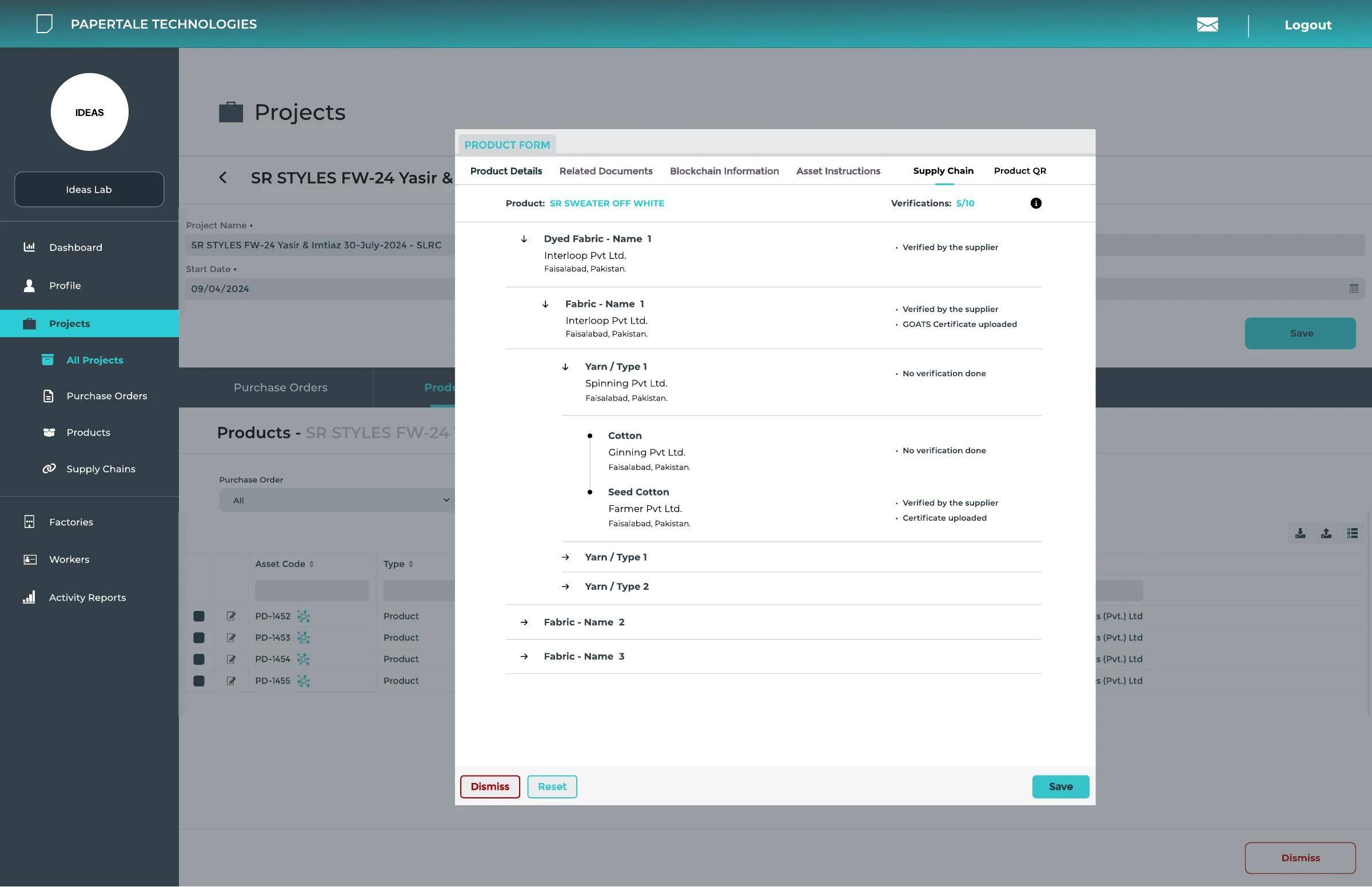
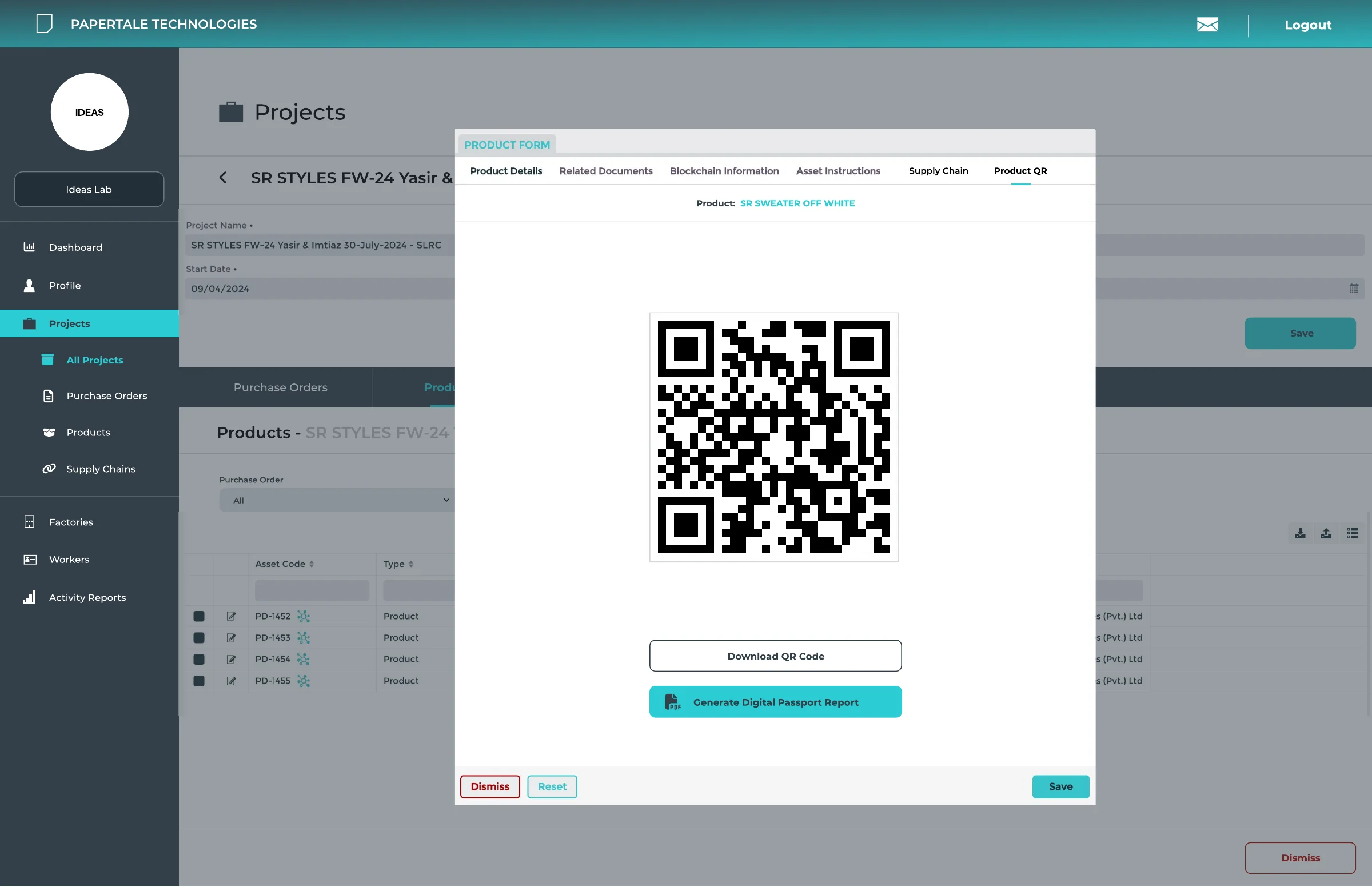
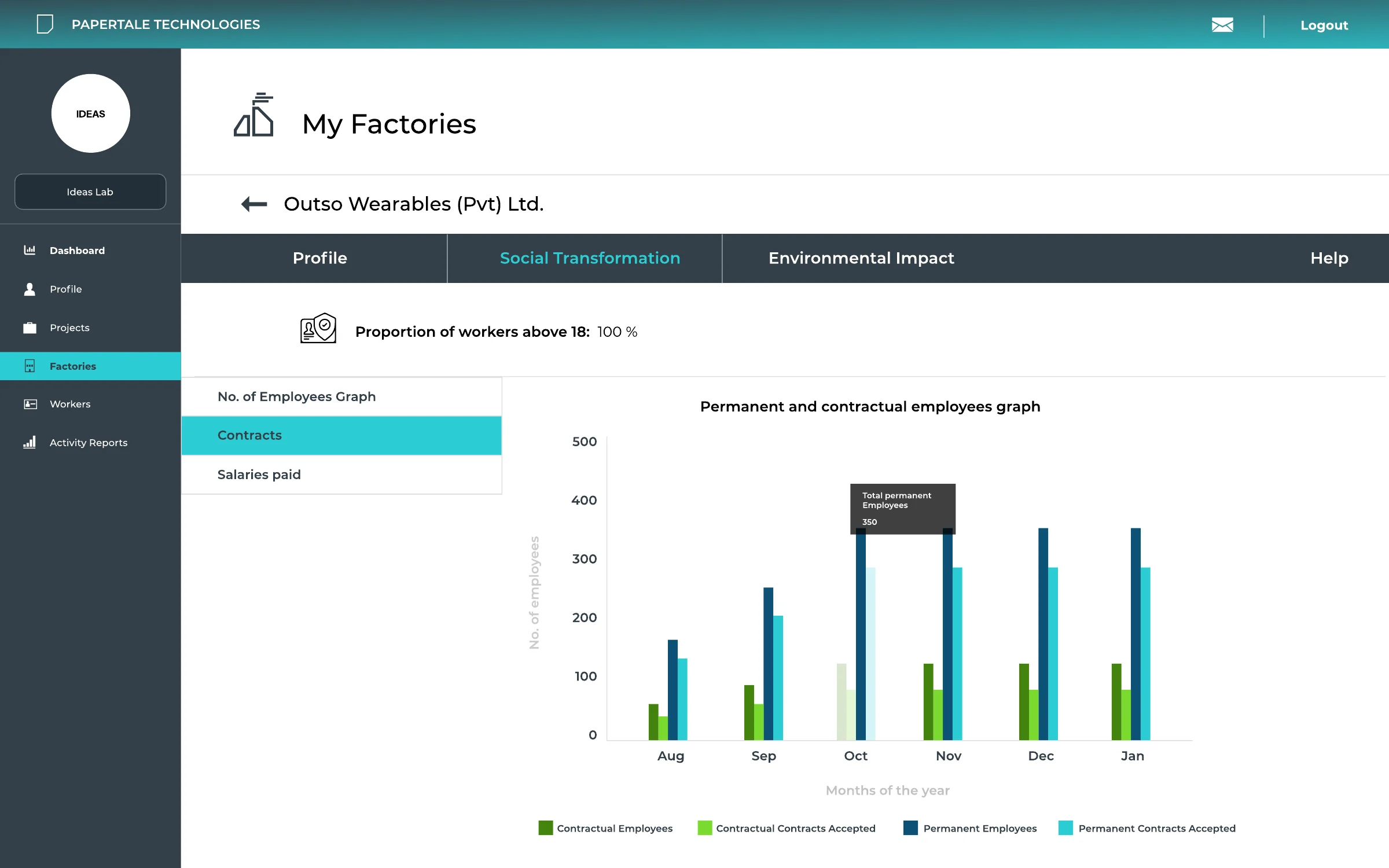
I redesigned the model as a network: any source can feed any step, and one step can draw on several sources. We added verification by independent third parties, with each approved claim recorded on blockchain. On top of that I designed three products: a Dashboard where factories and brands map the chain and share reports, a Workers App where factory workers follow their work, wages and reports, and a Consumer App where a buyer scans the tag on a garment and sees where it came from, who made it, and its impact. The buyer can even send the worker a thank-you.
What changed
A factory could compile data across its suppliers, calculate impact and send a verified report to its customer in one click. Reporting that took months came down to days. Two factories and two brands ran pilots, and Gina Tricot and Sail Racing launched collections carrying PaperTale tags. In December 2024 we launched the platform at Science Park Borås with a mini-hoodie carrying an NFC tag: tap it with a phone and the garment's whole chain opens.
What others said
- A Deloitte white paper on blockchain-based ESG reporting pointed to the Sail Racing project as a new benchmark for sustainability and compliance. Knitting Industry, October 2024: knittingindustry.com/papertales-transformative-technology-puts-people-in-the-picture/
- Gina Tricot's Sustainability Manager credited the work with PaperTale for the success of the brand's traceable collections. Science Park Borås, February 2024: scienceparkboras.se/2024/02/transparens-via-blockchain-okade-vardet-pa-gina-tricots-produkter/
What happened next
PaperTale did not get beyond its pilots. The company ran out of funding and operations stopped. The product had done what it was designed to do, with real factories and real brands.
Is something holding your business back? Tell me what. We start with a one-hour discovery call.
Ideas Studio Sweden
Malmö, Sweden